-
What We Do
-
AI NavigatorGain clear direction and momentum as your chart your organization’s AI path.
-
AI FoundationsEstablish the essential skills, systems, and mindset to support sustainable AI adoption.
-
Agentic AI LabExplore, prototype, and refine agent-driven solutions to accelerate real-world impact.
-
GovLabAdvance government innovation with practice AI solutions tailored to unique public sector needs.
-
-
Featured
 The AI Agent Advantage: Understanding Your Digital Workforce
-
Some Industries We Support
-
Featured
 Building Canadian Communities with Homegrown AI


Insights
The AI Agent Advantage: Inside the Operational Loop
In part 1 of “The AI Agent Advantage” series, we cut through the noise to explain what AI agents really are. Think of them as digital team members designed to take work off your plate, not just answer questions. We broke down the essentials: they’re autonomous, they plan and reason, and they know how to use tools to get things done. Now, let’s take a look at how these digital workers operate.
The Anatomy of a Digital Worker: The Four-Stage Loop
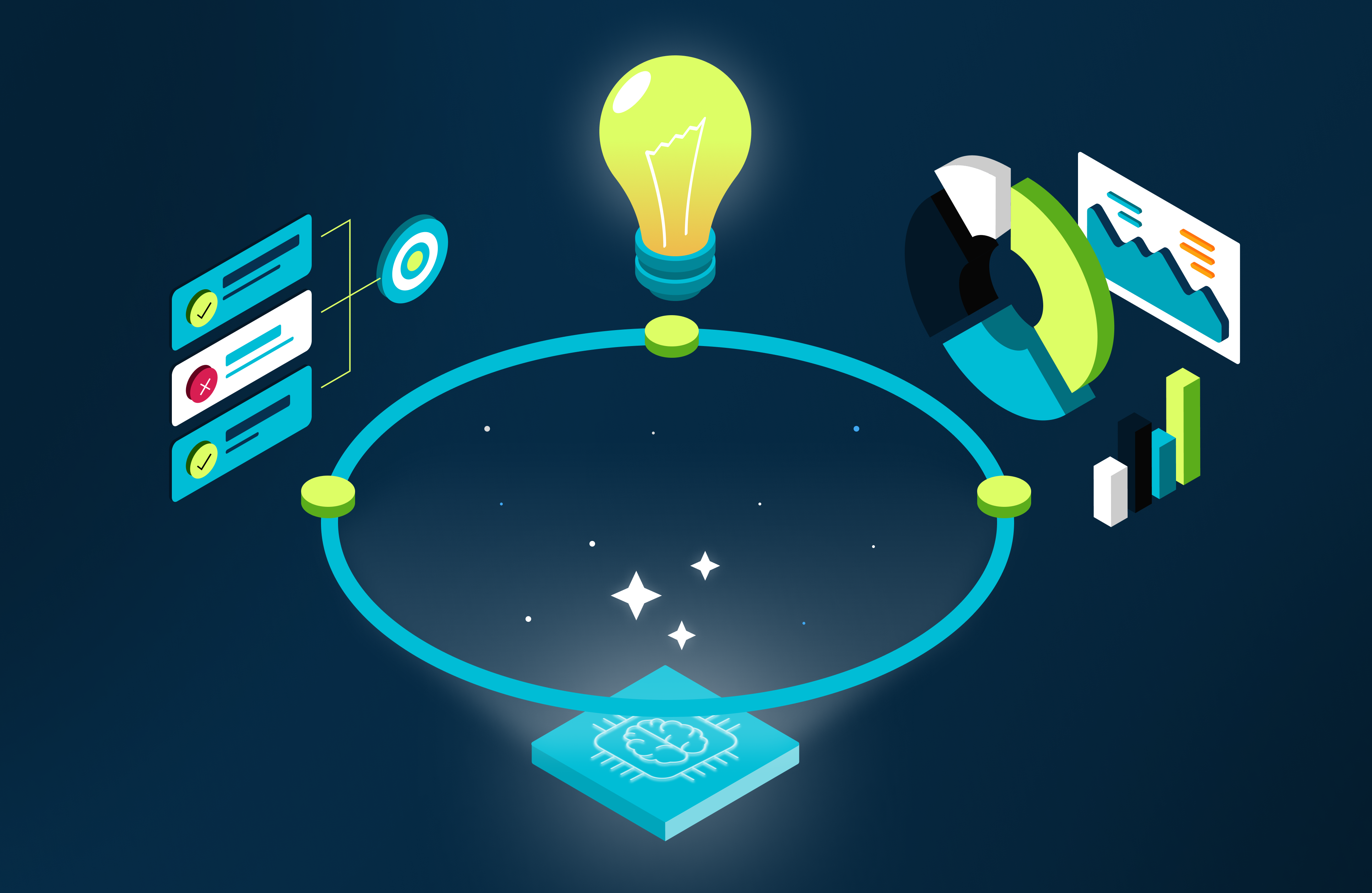
To trust AI agents with meaningful tasks, we need to stop thinking about them as mysterious “black boxes”. Yes, the tech behind them can be complex in some cases, but how they function doesn’t have to be. At the core of every effective AI agent is a simple loop:
Perceive → Plan → Act → Learn
This loop guides how agents move through the digital world. It’s what allows them to respond intelligently, take action, and get better over time. Here’s how it works:
1. Perceive
An agent’s work begins with perception. Instead of using eyes and ears like we do, an agent relies on digital signals from the surrounding software ecosystem, like new emails, data updates, tickets created, messages typed into chat, etc. These are its digital “sensors”. The agent, constantly aware of its digital surroundings, proactively picks up on these cues, initiating action based on the new event rather than waiting for a direct command from a human.
For example:
- A customer submits a new support ticket
- A sales number hits a key threshold
- A new entry shows up in a database
2. Plan
When something changes in a digital environment or a new piece of information is shared, the agent starts thinking. Using its built-in reasoning engine (usually powered by an LLM), it starts planning. What’s the goal or objective? What are the steps? What tools are needed? Should it write an email, run a script, or pull data from another system? It formulates a step-by-step plan to address the situation and move closer to its objective.
And importantly, it’s not rigid. If something shifts mid-task, new info or unexpected errors occur, for example, it can adjust the plan on the fly. That kind of real-time decision-making is what sets AI agents apart from simpler automations.
3. Act
Next, the agent puts the plan into motion. This is where the work gets done. Actions might include:
- Calling an API to pull customer data
- Writing to a spreadsheet or database
- Sending a formatted email
- Updating a task in a project tool
The ability to act is what elevates an agent from a simple chatbot to an effective digital worker. A key advantage is that you can build in strategic guardrails that keep a human-in-the-loop (HITL) for high-risk decisions. For example, an agent could require a human authorization before making a purchase, while it would handle lower-risk actions autonomously. This approach helps minimize risk while maximizing efficiency.
4. Learn
Finally, the agent checks its work. Did the task succeed? Was the outcome helpful? Did it get good feedback from a human? Over time, the agent learns which actions work best, storing insights that improve future performance. This learning process can be automatic or supported by human input. Either way, it means the more you use an agent, the smarter and more helpful it gets.
Why the Loop Matters
The real value of an AI agent does beyond its “brain” (the LLM). It’s in the system (the sensors, tools, and learning loop) as a whole. An LLM alone can’t take meaningful action. But, build it into an agent that can perceive, plan, act, and learn? Now you’ve got something that can genuinely support your business.
It’s not enough to ask, “Which LLM should we use?”. The better question is: “How do we design the full system around it?”. The shift in thinking from choosing a smart model to building a complete, reliable system is what unlocks real business value.
What Makes an Agent an Agent?
Here’s a quick snapshot to help make the distinction more straightforward:
| Feature | Digital Assistant (The Copilot) | AI Agent (The Digital Worker) |
| Primary Function | Assists a user with specific tasks within a defined application or workflow. | Autonomously executes complex, multi-step processes to achieve a goal (with human-in-the-loop). |
| Autonomy Level | Low – Reactive Responds to user commands. Typically not present in a sandbox. | High – Proactive Can operate independently, make decisions, and take actions with limited human supervision and intervention. |
| Key Capabilities | Integrates an LLM with a user interface and limited tools (e.g., calendar access). | Combines an LLM (reasoning) with planning, memory, and the ability to use multiple external tools (APIs, databases). |
| Business Analogy | A helpful executive assistant who can draft your emails and schedule your meetings when you ask (provided inputs are clear). | A project manager who can run a marketing campaign from start to finish based on a high-level objective. |
| Example Use Case | “Summarize my unread emails and draft a reply to the one from Jane.” “Schedule a meeting at 10.00 AM with Jane at Credo Coffee.” “<Tab> to predict the next X lines of code.” | “Create an entire application that can do X.” “Manage my time this week so that I only attend A,B,C meetings and reschedule others to next week.” “Provide me this week’s fleet schedule for confirmation and then issue to dispatch.” |
From Theory to Practice
Understanding the perceive-plan-act-learn loop helps take the mystery out of AI agents. They’re not magic. They’re systems that are designed to work, adapt, and improve. Once you understand how they operate, it becomes easier to delegate to them with confidence.
In our final post in this series, we’ll shift from how agents work to what they can do in your business, including specific, high-impact roles they can take on today, and how to set them up for success.