
/Task%20Automation.png?width=90&name=Task%20Automation.png)


Using real-time computer vision
to decrease concrete pour delays
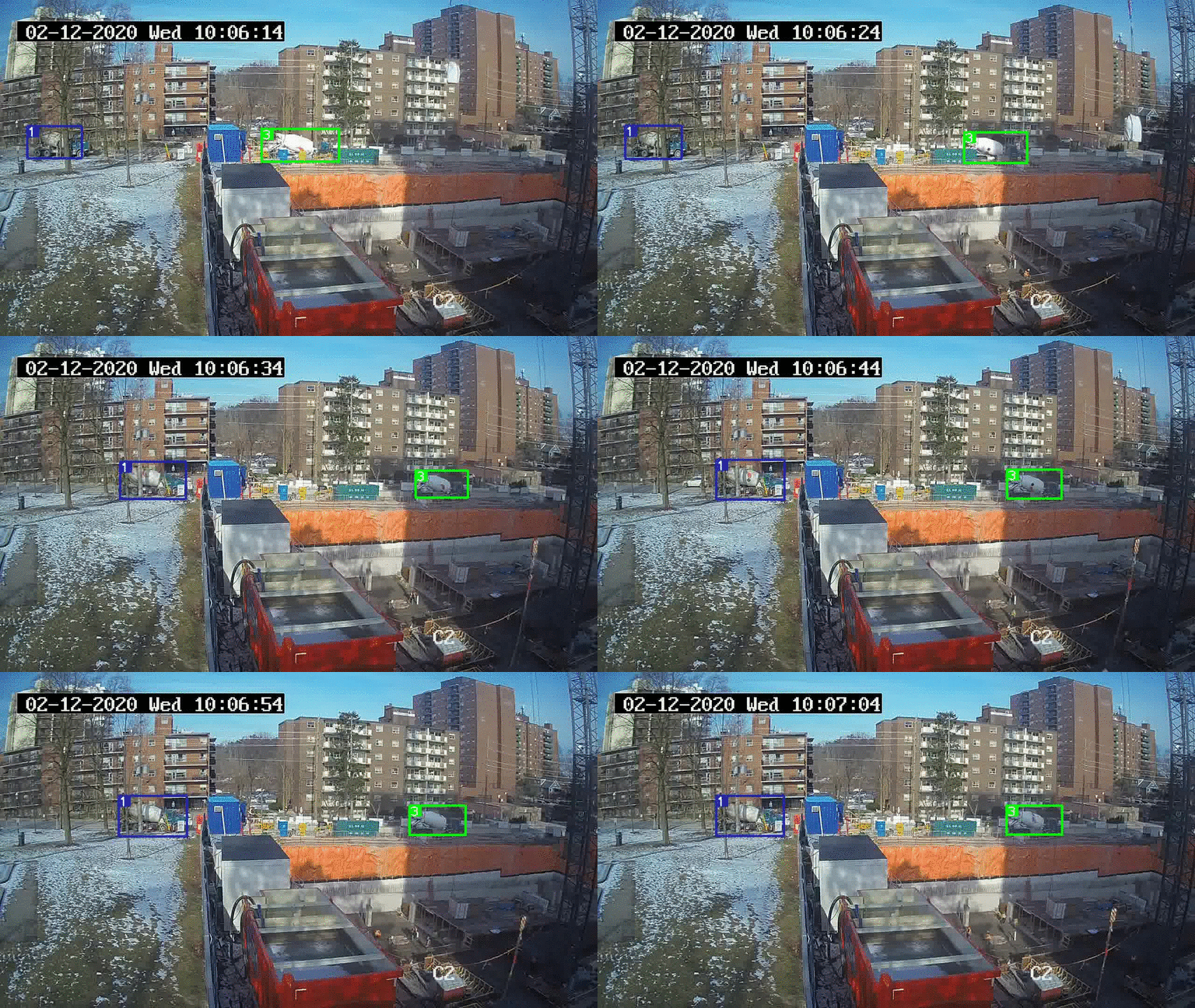
On a busy construction site, the gap between one concrete truck finishing and the next arriving is a window where work stops and
costs accumulate. A large construction company deployed AltaML's computer vision system to track every truck through every stage of
its cycle — so schedulers could call the next truck at exactly the right moment, without having to rely on rough estimates and "best guesses".
/Hard%20Hat.png?width=60&name=Hard%20Hat.png)
CLIENT
One of Canada's largest general contracting companies
/computer-vision.png?width=60&name=computer-vision.png)
PROJECT
Computer vision system for real-time concrete truck tracking and cycle time optimization
/machine-learning.png?width=60&name=machine-learning.png)
WHAT WE DID
Computer vision, machine learning model development, and on-site workflow integration
/stopwatch-fast.png?width=60&name=stopwatch-fast.png)
IMPACT
Real-time visibility into every truck's pour stage, tighter scheduling between arrivals, and reduced downtime on active sites
/stopwatch-fast%20(white).png?width=45&name=stopwatch-fast%20(white).png) Less downtime between pours
Coordinators call trucks based on what's actually happening, not what's estimated, closing the gap between one truck clearing and the next arriving.
Less downtime between pours
Coordinators call trucks based on what's actually happening, not what's estimated, closing the gap between one truck clearing and the next arriving..png?width=45&name=sliders%20(white).png) More efficient scheduling
With accurate stage data, pour sequencing becomes a logistics problem rather than a guesswork problem. Coordinators can plan the next arrival precisely, reducing both idle time and site congestion.
More efficient scheduling
With accurate stage data, pour sequencing becomes a logistics problem rather than a guesswork problem. Coordinators can plan the next arrival precisely, reducing both idle time and site congestion.
/shield%20(white).png?width=45&name=shield%20(white).png) Improved site safety
Improved site safety
Real-time visibility into heavy vehicle position and status gives ground teams better situational awareness on an active pour site.